The Asian Development Bank (ADB) has released its latest economic projections for Cambodia, outlining a path of steady growth tempered by significant external variables. According to the Asian Development Outlook (ADO) April 2026, Cambodia is positioned to maintain its status as one of the region’s most resilient economies, provided that global geopolitical tensions remain contained.
The 4.5% Growth Target: A Conditional Success
The ADB projects Cambodia’s Gross Domestic Product (GDP) to grow by 4.5% in 2026. However, this figure comes with a crucial caveat: it is based on an “Early Middle East Stabilization Scenario.” Under this projection, the ADB assumes that tensions in the Middle East will stabilize shortly, preventing further spikes in energy and transport costs. If this stability holds, the momentum is expected to carry into 2027, with growth potentially accelerating to 5.0%.
Sectoral Performance: Industry Leads the Way
Cambodia’s economic engine is increasingly diverse, shifting away from a sole reliance on traditional garments.
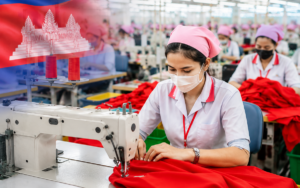
- 1. Manufacturing (7.3% Growth): The industrial sector remains the primary driver. While garment exports remain stable, the real story is the surge in non-garment manufacturing, such as electrical components, tires, and furniture.
- 2. Agriculture (0.9% Growth): This sector remains steady but modest. The focus is on high-value crops like cashew nuts and rice, supported by government efforts to reintegrate labor into rural production.
- 3. Services (2.3% Growth): The services sector faces headwinds, particularly due to disruptions at the Thailand border, which have slowed bilateral trade and the flow of regional tourists.

Navigating External Risks
The 2026 outlook highlights how deeply Cambodia is integrated into the global market, making it sensitive to external shocks:
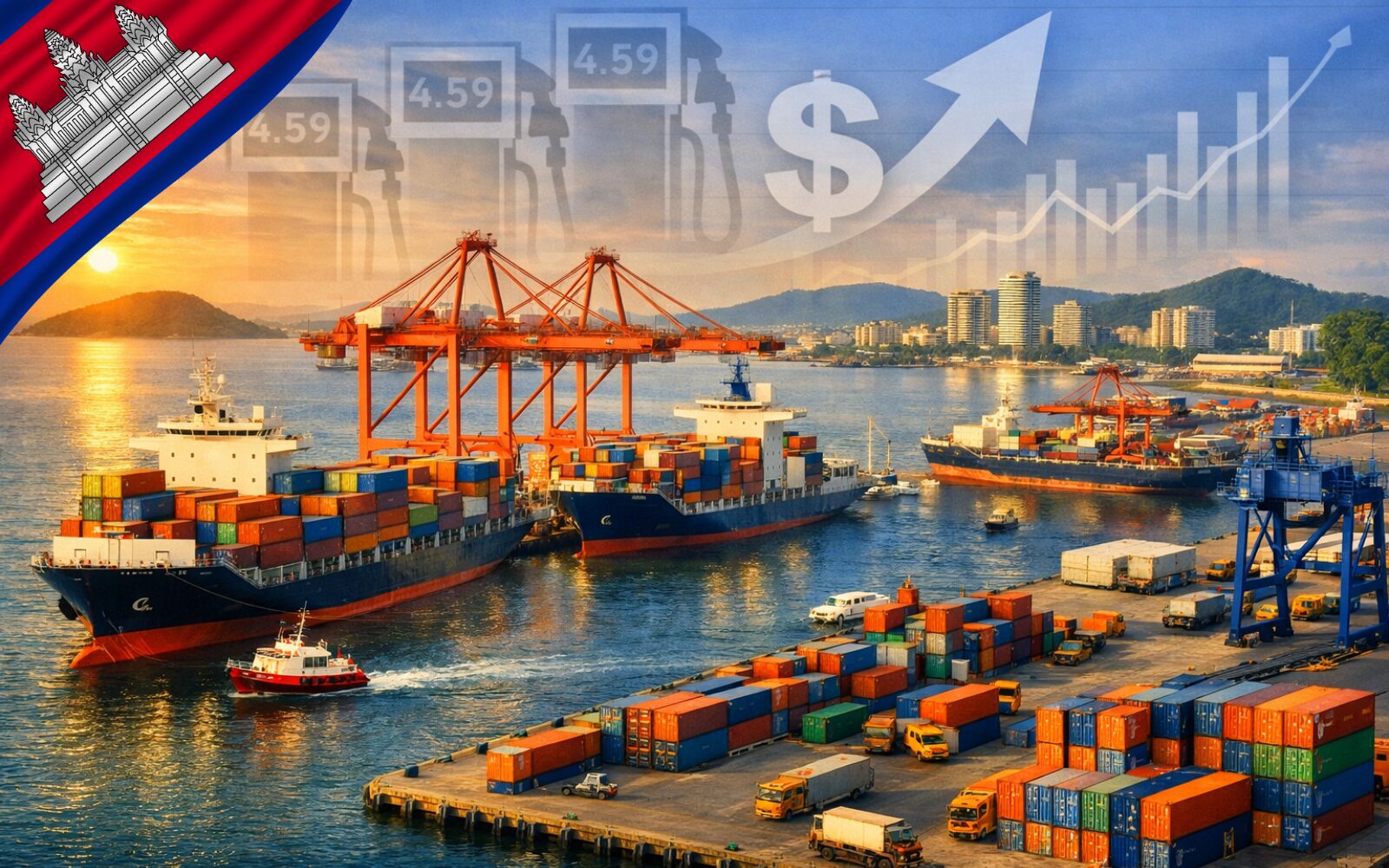
- 1. Energy Prices: As a net importer of fuel and fertilizer, Cambodia is vulnerable to price shocks. The ADB warns that a sustained 10% increase in oil prices could reduce GDP growth by 0.4 percentage points.
- 2. Border Stability: Continued disruptions at the Thailand-Cambodia border are a significant risk, with the potential to shave up to 1.4 percentage points off growth if trade and tourism flows do not normalize.
- 3. Inflation: Inflation is expected to hover around 2.8% in 2026, driven largely by the cost of imported commodities.
The Road Ahead: Skills and Infrastructure
To sustain this growth, the ADB emphasizes the “Human Capital” factor. Strengthening technical and vocational training is viewed as essential for Cambodia to move up the value chain. By bridging the skills gap and continuing to invest in digital infrastructure, the Kingdom aims to remain a highly attractive destination for Foreign Direct Investment (FDI).
Conclusion
Cambodia’s economic story for 2026 is one of cautious optimism. While a 4.5% growth rate is an impressive target in a volatile global climate, its achievement rests on the stabilization of international conflicts. For businesses and investors, the key will be monitoring global energy trends and regional border policies as the year progresses.
Source: Asian Development Bank (ADB)