Overall Economic Direction
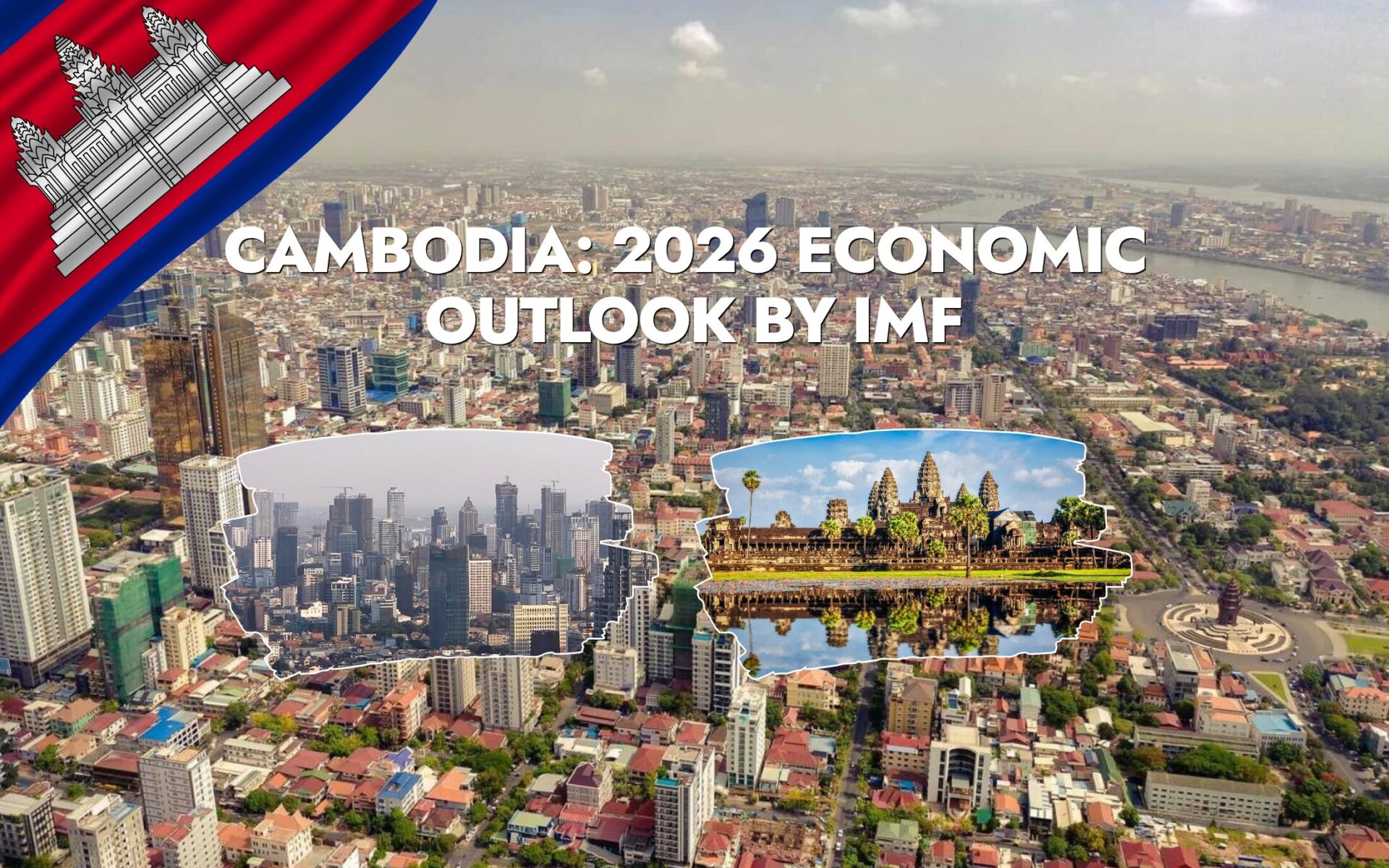
The IMF expects Cambodia’s economy in 2026 to continue growing, but at a noticeably slower pace, with GDP expansion around 4.0%. This reflects a shift away from the strong post-pandemic rebound toward a more moderate and fragile growth phase.
Rather than signaling a crisis, the IMF views 2026 as a transition year—where structural weaknesses, external pressures, and financial risks become more visible after several years of rapid recovery.
Growth Slowdown: What’s Really Happening
Cambodia’s growth trajectory tells an important story:
- – 2024: Strong rebound (~6%) driven by reopening and exports
- – 2025: Growth moderates (~4.8%)
- – 2026: Further easing (~4.0%)
This gradual slowdown is not sudden—it reflects underlying structural dependence on external demand, especially in key sectors.
Sector-by-Sector Outlook
1. Manufacturing & Exports (Core Growth Engine)
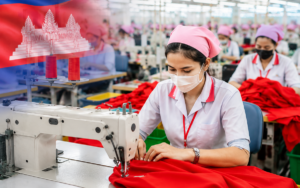
Cambodia’s export sector—particularly garments, footwear, and travel goods—remains critical. However:
- – Demand from major markets like the US and EU is softening
- – Global consumers are spending less on non-essential goods
- – Competition from lower-cost producers is increasing
As a result, export growth is expected to remain subdued in 2026, limiting overall GDP expansion.
2. Tourism (Gradual but Incomplete Recovery)
Tourism continues to recover but has not fully returned to pre-pandemic levels.
- – Visitor numbers are rising, but spending per tourist remains lower
- – Regional competition (Thailand, Vietnam) is strong
- – Travel patterns have shifted, with more budget-conscious tourists
The IMF expects tourism to support growth, but not strongly enough to drive it.
3. Construction & Real Estate (Key Vulnerability)
One of the most important concerns highlighted by the IMF is the real estate sector:
- – Oversupply in property markets
- – Slower investment in construction projects
- – Rising risks in developer financing
This sector, which previously fueled rapid growth, is now a drag on the economy and a financial risk.
4. Domestic Consumption (Weak Momentum)
Household spending remains relatively weak, due to:
- – High household debt levels
- – Slower income growth
- – Cautious consumer behavior
This limits internal demand and makes Cambodia more reliant on exports.
Financial Sector Risks (Major IMF Concern)
The IMF places strong emphasis on financial stability risks:
- – Rapid credit growth in previous years
- – Exposure to real estate loans
- – Potential increase in non-performing loans (NPLs)
➡️ While the banking sector remains stable overall, the IMF warns that stress in real estate could spill over into the financial system.
External Environment (Global Pressure)
Cambodia’s economy is highly open and dependent on global conditions. In 2026:
- – Global growth is expected to remain moderate (~3%)
- – Trade demand is weaker
- – Geopolitical tensions (e.g., Middle East, global supply chains) create uncertainty
This means Cambodia has limited control over some of its biggest growth drivers.
Inflation & Macroeconomic Stability
One positive aspect of the IMF outlook is macroeconomic stability:
- – Inflation is expected to remain low and stable (around 2–3%)
- – The exchange rate remains relatively stable due to dollarization
- – Public debt is manageable
These factors provide a buffer against shocks, even as growth slows.
Risks: Why the IMF Is Cautious
The IMF states that risks are “tilted to the downside”, meaning negative scenarios are more likely than positive surprises.
Key risks include:
- – A sharper-than-expected global slowdown
- – Financial stress from real estate or banking sectors
- – Decline in exports or FDI
- – External shocks (energy prices, geopolitical conflicts)
Opportunities & Structural Strengths
Despite the cautious outlook, Cambodia still has important advantages:
- – Strategic location within ASEAN
- – Participation in trade agreements (RCEP, ASEAN+ FTAs)
- – Continued inflows of foreign investment
- – A young and growing workforce
These factors support long-term growth potential, even if short-term momentum slows.
IMF Policy Recommendations
The IMF suggests Cambodia should focus on:
- – Strengthening financial sector supervision
- – Managing risks in real estate and credit markets
- – Diversifying the economy beyond garments and construction
- – Improving productivity and skills development
———————
Source: International Monetary Fund (IMF)